

Vol. 12. Núm. 40.
Páginas 2370-2379 (Octubre 2017)

Actualización
Lesiones de las válvulas tricúspide y pulmonar

Pulmonary and tricuspid valve lesions

V. Bonilla JiménezaO. González LorenzobE.J. García Pérez Velascoa
Doi : https://10.1016/j.med.2017.09.003
Opciones
Resumen
Introducción

Las enfermedades que afectan a las válvulas del lado derecho del corazón reciben menos atención que las valvulopatías izquierdas. Sin embargo, es frecuente encontrar disfunción de las mismas, ya sea en forma de válvulas insuficientes, estenóticas o una mezcla de ambas.

Etiología y manifestaciones clínicas

En el caso de la insuficiencia tricúspide e insuficiencia pulmonar, la etiología más frecuente es la secundaria a la dilatación del ventrículo derecho y la arteria pulmonar, respectivamente. La causa más frecuente de estenosis tricúspide es la reumática y, en el caso de la estenosis pulmonar, la afectación congénita. Las valvulopatías derechas provocan síntomas de congestión sistémica como hepatomegalia, ascitis, edemas en los miembros inferiores y síntomas debidos a bajo gasto (disnea, dolor torácico, síncope) que en ausencia de valvulopatía izquierda no suele asociarse a congestión pulmonar.

Diagnóstico y tratamiento

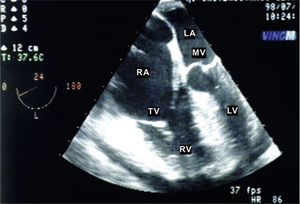
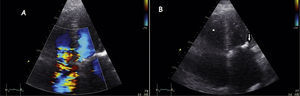
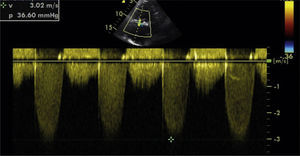
El ecocardiograma es la base de la evaluación diagnóstica y el estudio Doppler es útil para la cuantificación de las mismas. Aunque la restricción hidrosalina y los diuréticos constituyen la base del tratamiento médico, en los casos más graves puede ser necesario el intervencionismo, ya sea en forma de cirugía o de procedimientos percutáneos.

Palabras clave
Insuficiencia
Estenosis
Pulmonar
Tricúspide
Abstract
Introduction

Diseases affecting right-sided heart valves receive less attention than left-sided valvular heart disease. However, it is common to find dysfunction of the same, either in the form of insufficient valves, stenotic or a mixture of both.

Etiology and clinical manifestations

In the case of tricuspid insufficiency and pulmonary insufficiency, the most frequent etiology is secondary to dilation of the right ventricle and pulmonary artery, respectively. The most frequent cause of tricuspid stenosis is rheumatic and in the case of pulmonary stenosis, the congenital affectation. Right valvulopathy causes symptoms of systemic congestion such as hepatomegaly, ascites, edema in the lower limbs and symptoms due to low expenditure (dyspnea, chest pain, syncope), which in the absence of left valvulopathy is not usually associated with pulmonary congestion.

Diagnosis and treatment

The echocardiogram is the basis of the diagnostic evaluation and the Doppler study is useful for the quantification of the same. Although hydrosaline restriction and diuretics are the basis of medical treatment, in the most severe cases interventional intervention may be necessary, either in the form of surgery or percutaneous procedures.

Keywords
Insufficiency
Stenosis
Pulmonary
Tricuspid

Identifíquese

¿Aún no es suscriptor de la revista?

Comprar el acceso al artículo

Comprando el artículo el pdf del mismo podrá ser descargado

Teléfono para incidencias

De lunes a viernes de 9h a 18h (GMT+1) excepto los meses de julio y agosto que será de 9 a 15h

Llamadas desde España 932 415 960
Llamadas desde fuera de España +34 932 415 960
Bibliografía
[1]
201710130015405998
201710130015405999
M. Taramaso, H. Vanermen, F. Maisano, A. Guidotti, G. La Canna, O. Alfieri.
The growing clinical importance of secondary tricuspid regurgitation.
J Am Coll Cardiol, (2012), 59 pp. 703-710
[2]
2017101300154059910
2017101300154059911
P.M. Shah.
Valvulopatía tricuspídea y pulmonar: evaluación y tratamiento.
Rev Esp Cardiol, (2010), 63 pp. 1349-1365
[3]
2017101300154059912
2017101300154059913
D. Mutlak, J. Lessick, S.A. Reisner, D. Aronson, S. Dabbah, Y. Agmon.
Echocardiography-based spectrum of severe tricuspid regurgitation: the frecuency of apparently idiopathic tricuspid regurgitation.
J Am Soc Echocardiogr, (2007), 20 pp. 405-408
[4]
2017101300154059914
2017101300154059915
A. Robert.
Tricuspid valve pulmonary valve and multiple valve disease.
Hurt's the heart, 11 ed., McGraw-Hill, pp. 1707-1722
[5]
2017101300154059916
2017101300154059917
K.S. Al-Najashi, O.H. Balint, E. Oechslin, W.G. Williams, C.K. Silverside.
Mid-term outcomes in adult with Ebstein anomaly and cavopulmonary shunts.
Ann Thorac Surg., (2009), 88 pp. 131-136
[6]
2017101300154059918
2017101300154059919
O. González, M.T. Alberca, C. Santoja.
Echocardiographic diagnosis of carcinoid disease: Exceptional evolution after ovarian tumor resection without cardiac surgery.
Eur J Echocardiogr, (2007), 8 pp. 497-500
[7]
2017101300154059920
2017101300154059921
S. Vallette, K. Serri, O. Serri.
Cabergoline therapy for prolactinomas: is valvular heart disease a real safety concern?.
Expert Rev Cardiovasc Ther., (2010), 8 pp. 49-54
[8]
2017101300154059922
2017101300154059923
J.M. Rivera, P.P.M. Vandervoort, J.A. Vázquez de Prada, D. Mele, T.H. Kaeson, A. Morehead.
Which physical factors determine tricuspid regurgitation jet area in the clinical setting?.
Am J Cardiol., (1993), 72 pp. 1305-1309
[9]
2017101300154059924
2017101300154059925
W.A. Zoghbi, M. Enríquez-Sarano, E. Foster, P.A. Grayburn, C.D. Kraft, R.A. Levine, et al.
Recommendations for evaluation of the severity of native valvular regurgitation with twodimensional and Doppler echocardiography. A report from the American Society of Echocardiography's Nomenclature and Standards Committee and the Task Force on valvular regurgitation.
J Am Soc Echocardiogr, (2003), 16 pp. 777-802
[10]
2017101300154059926
2017101300154059927
W.G. Hundley, D.A. Bluemke, J.P. Finn, S.D. Flamm, M.A. Fogel, M.G. Friedrich, et al.
ACCF/ACR/AHA/NASCI/SCMR 2010 Expert Consensus Document on Cardiovascular Magnetic Resonance. A Report of the American College of Cardiology Foundation Taske Force on Expert Consensus Document.
Circulation., (2010), 121 pp. 2462-2508
[11]
2017101300154059928
2017101300154059929
R.A. Nishimura, C.M. Otto, R.O. Bonow, B.A. Carabello, J.P. Erwin 3rd, R.A. Guyton, et al.
AHA/ACC guideline for the management of patients with valvular heart disease: a report of the American College of Cardiology/American Heart Association Task Force on Practice Guidelines.
J Am Coll Cardiol., (2014), 63 pp. 57-185
[12]
2017101300154059930
2017101300154059931
A. Vahanian, O. Alfieri, F. Andreotti, M.J. Antunes, G. Barón-Esquivias, H. Baumgartner, et al.
Guidelines on the management of valvular heart disease.
Eur Heart J, (2012), 33 pp. 2451-2496
[13]
2017101300154059932
2017101300154059933
P.M. McCarthy, S.K. Bhudia, J. Rajeswaran, K.J. Hoercher, B.W. Lytle, D.M. Crosgrove, et al.
Tricuspid valve repair: durability and risk factors for failure.
J Thorac Cardiovasc Surg., (2004), 127 pp. 674-685
[14]
2017101300154059934
2017101300154059935
G. Rizzoli, I. Vendramin, G. Nesseris, T. Bottio, C. Guglielmi, L. Schiavon.
Biological or mechanical prostheses in tricuspid position?. A meta-analysis of intrainstitutional results.
Ann Thorac Surg., (2004), 77 pp. 1607-1614
[15]
2017101300154059936
2017101300154059937
S.J. Daniels, G.S. Mintz, M.N. Kotler.
Rheumatic tricuspid valve disease: two-dimensional echocardiographic, hemodynamic, and angiographic correlations.
Am J Cardiol., (1983), 51 pp. 492-496
[16]
2017101300154059938
2017101300154059939
H. Baumgartner, J. Hung, J. Bermejo, J.B. Chambers, A. Evangelista, B.P. Griffin, et al.
Echocardiographic assessment of valve stenosis: EAE/ASE recommendations for clinical practice.
J Am Soc Echocardiogr, (2009), 22 pp. 1-23
[17]
2017101300154059940
2017101300154059941
J.E. Pérez, P.A. Ludbrook, G.G. Ahumada.
Usefulness of Doppler echocardiography in detecting tricuspid valve stenosis.
Am J Cardiol., (1985), 55 pp. 601-603
[18]
2017101300154059942
2017101300154059943
E. Yeter, K. Ozlem, H. Kilic, A. Ramazan, S. Acikel.
Tricuspid balloon valvuloplasty to treat tricuspid stenosis.
J Heart Valve Dis., (2010), 19 pp. 159-160
[19]
2017101300154059944
2017101300154059945
A. Paredes, M. Valdebenito, V. Neira, P. Castro, R. Zalaquett.
Síndrome carcinoide y compromiso valvular cardiaco.
Rev Chil Cardiol., (2014), 33 pp. 38-43
[20]
2017101300154059946
2017101300154059947
M. Campbell.
Factors in the etiology of pulmonary stenosis.
Br Heart J., (1962), 24 pp. 625-632
[21]
2017101300154059948
2017101300154059949
C.O. Lima, D.J. Sahn, L.M. Valdes-Cruz, S.J. Goldberg, J.V. Barron, H.D. Allen, et al.
Noninvasive prediction of transvalvular pressure gradient in patients with pulmonary stenosis by quantitative two-dimensional echocardiographic Doppler studies.
Circulation., (1983), 67 pp. 866-871
[22]
2017101300154059950
2017101300154059951
C.A. Warnes, R.G. Williams, T.M. Bashore, J.S. Child, H.M. Connolly, J.A. Dearani, et al.
ACC/AHA 2008 Guidelines for the management of adults with congenital heart disease: a report of the American College of Cardiology/American Heart Association Task Force on Practice Guidelines.
Circulation., (2008), 118 pp. 714-833
[23]
2017101300154059952
2017101300154059953
S. Khambadkone, L. Coats, A. Taylor, Y. Boudjemline, G. Derrick, V. Tsang, et al.
Percutaneus pulmonary valve implantation in humans: results in 59 consecutive patients.
Circulation., (2005), 112 pp. 1189-1197
[24]
2017101300154059954
2017101300154059955
C.J. Hayes, W.M. Gersony, D.J. Driscol, J.F. Keane, L. Kidd, W.M. O’Fallon, et al.
Second natural history study of congenital heart defects.
Results of treatment of patients with pulmonary valve stenosis. Circulation., (1993), 87 pp. 128-137
[25]
2017101300154059956
2017101300154059957
A.L. Knauth, K. Gauvreau, A.J. Powel, M.J. Landzberg, E.P. Walsh, J.E. Lock, et al.
Ventricular size and function assessed by cardiac MRI predict major adverse clinical outcomes late after tetraology of Fallot repair.
Heart., (2008), 94 pp. 211-216
[26]
2017101300154059958
2017101300154059959
W. Li, P.A. Davloouros, P.J. Kilner, D.J. Pennell, D. Gibson, M.Y. Henein, et al.
Doppler echocardiographic assessment of pulmonary regurgitation in adults with repairesd tetralogy of Fallot: comparison with cardiovascular magnetic resonance imaging.
Am Heart J., (2004), 147 pp. 165-172
[27]
2017101300154059960
2017101300154059961
J. Therrien, Y. Provost, N. Mechant, W. Williams, J. Colman, G. Webb.
Optimal timing for pulmonary valve replacement in adults after tetralogy of Fallot rapair.
Am J Cardiol., (2005), 95 pp. 779-782
[28]
2017101300154059962
2017101300154059963
W. Jang, Y.J. Kim, K. Choi, H.G. Lim, W.H. Kim, J.R. Lee.
Mid-term results of bioprosthetic pulmonary valve replacement in pulmonary regurgitation after tetraology of Fallot repair.
Eur J Cardiothorac Surg., (2012), 42 pp. e1-e8