

Vol. 13. Núm. 35.
Páginas 2037-2044 (Junio 2021)

Actualización
Insuficiencia cardíaca con fracción de eyección ventricular preservada

Heart failure with preserved ventricular ejection fraction

M.C. Amores LuqueJ.D. Sánchez VegaG.L. Alonso SalinasJ.L. Zamorano Gómez
Doi : https://10.1016/j.med.2021.06.004
Opciones
Resumen

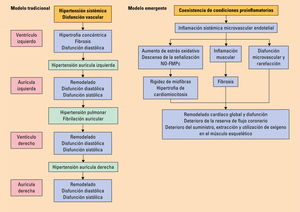
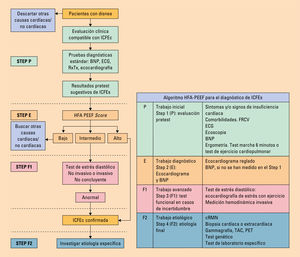
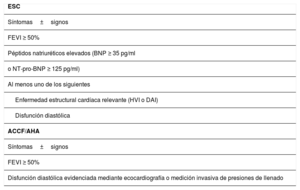
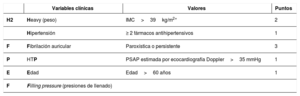
La insuficiencia cardíaca (IC) con fracción de eyección del ventrículo izquierdo preservada (FEVIp) constituye una causa importante de morbimortalidad en nuestro medio, y su prevalencia está aumentando a causa del envejecimiento de la población y del aumento de las comorbilidades, con influencia sobre el sistema cardiovascular. Las tasas de mortalidad son cercanas a las de los pacientes con IC y fracción de eyección reducida (FEVIr). La disfunción diastólica por aumento de la rigidez miocárdica constituye la base de esta entidad, al producirse una transmisión retrógrada de las presiones de llenado al circuito vascular pulmonar y a las cámaras derechas. A nivel molecular, se ha descrito un aumento del estado proinflamatorio y protrombótico como origen del problema. El diagnóstico supone un auténtico reto y no existe un único método validado, habiéndose propuesto varias tablas de puntuación en base a hallazgos clínicos, analíticos, ecocardiográficos y de medición invasiva de la presión diastólica del ventrículo izquierdo. No existe ningún fármaco que haya demostrado mejorías en la supervivencia o en la disminución de la tasa de ingresos por IC. El tratamiento se centra en la mejoría de la capacidad funcional y de la calidad de vida, incidiendo en el manejo de las comorbilidades y del estado de volemia.

Palabras clave
Insuficiencia cardíaca
Fracción de eyección ventricular izquierda preservada
Disfunción diastólica
Diagnóstico
Tratamiento
Abstract

Heart failure (HF) with preserved left ventricular ejection fraction (PLVEF) is a major cause of morbidity and mortality in our setting, and its prevalence is rising due to the ageing population and increased comorbidities that impact the cardiovascular system. Mortality rates are close to those of patients with reduced ejection fraction (rLVEF). Diastolic dysfunction due to increased myocardial stiffness is the basis of this condition, as there is retrograde transmission of filling pressures to the pulmonary vascular circuit and right chambers. An increased proinflammatory and prothrombotic state has been described as the origin of the problem at the molecular level. Diagnosis is very challenging, and there is no single validated method, several score tables have been proposed based on clinical, laboratory, echocardiographic findings, and invasive measurement of the left ventricle diastolic pressure. No drug has been shown to improve survival or decrease the rate of admissions due to HF. Treatment focusses on improving functional capacity and quality of life, with emphasis on the management of comorbidities and blood volume status.

Keywords
Heart failure
Preserved left ventricular ejection fraction
Diastolic dysfunction
Diagnosis
Treatment

Identifíquese

¿Aún no es suscriptor de la revista?
Comprar el acceso al artículo

Comprando el artículo el pdf del mismo podrá ser descargado

Teléfono para incidencias

De lunes a viernes de 9h a 18h (GMT+1) excepto los meses de julio y agosto que será de 9 a 15h
Llamadas desde España 932 415 960
Llamadas desde fuera de España +34 932 415 960
Bibliografía
[1]
P. Ponikowski
202106110608309879
2021061106083098710
, A.A. Voors, S.D. Anker, H. Bueno, J.G.F. Cleland, A.J.S. Coats, et al.
2016 ESC guidelines for the diagnosis and treatment of acute and chronic heart failure.
Rev Esp Cardiol (Engl Ed)., (2016), 69 pp. 1167
[2]
E.E. van Riet
2021061106083098711
, A.W. Hoes, K.P. Wagenaar, A. Limburg, M.A. Landman, F.H. Rutten.
Epidemiology of heart failure: the prevalence of heart failure and ventricular dysfunction in older adults over time. A systematic review.
Eur J Heart Fail., (2016), 18 pp. 242-252
[3]
A.A. Oktay
2021061106083098712
2021061106083098713
, J.D. Rich, S.J. Shah.
The emerging epidemic of heart failure with preserved ejection fraction.
Curr Heart Fail Rep., (2013), 10 pp. 401-410
[4]
B. Pieske
2021061106083098714
2021061106083098715
, C. Tschöpe, R.A. de Boer, A.G. Fraser, S.D. Anker, E. Donal, et al.
How to diagnose heart failure with preserved ejection fraction: the HFA–PEFF diagnostic algorithm: a consensus recommendation from the Heart Failure Association (HFA) of the European Society of Cardiology (ESC).
Eur Heart J., (2019), 40 pp. 3297-3317
[5]
P.E. Carson
2021061106083098716
, I.S. Anand, S. Win, T. Rector, M. Haass, J. Lopez-Sendon, et al.
The hospitalization burden and post-hospitalization mortality risk in heart failure with preserved ejection fraction: results from the I-PRESERVE Trial (irbesartan in heart failure and preserved ejection fraction).
JACC Heart Fail., (2015), 3 pp. 429-4416
[6]
J.J. McMurray
2021061106083098717
, P.E. Carson, M. Komajda, R. McKelvie, M.R. Zile, A. Ptaszynska, et al.
Heart failure with preserved ejection fraction: clinical characteristics of 4133 patients enrolled in the I-PRESERVE trial.
Eur J Heart Fail., (2008), 10 pp. 149-156
[7]
B.A. Borlaug
2021061106083098718
2021061106083098719
, C.S. Lam, V.L. Roger, R.J. Rodeheffer, M.M. Redfield.
Contractility and ventricular systolic stiffening in hypertensive heart disease: insights into the pathogenesis of heart failure with preserved ejection fraction.
J Am Coll Cardiol., (2009), 54 pp. 410-418
[8]
M.R. Zile
2021061106083098720
.
Insuficiencia cardíaca con fracción de eyección conservada.
Braunwald. Tratado de Cardiología, 11ª ed., Elsevier, pp. 523-542
[9]
W.J. Paulus
2021061106083098721
2021061106083098722
, C. Tschöpe.
A novel paradigm for heart failure with preserved ejection fraction: comorbidities drive myocardial dysfunction and remodeling through coronary microvascular endothelial inflammation.
J Am Coll Cardiol., (2013), 62 pp. 263-271
[10]
Y.T. Tan
2021061106083098723
, F. Wenzelburger, E. Lee, G. Heatlie, F. Leyva, K. Patel, et al.
The pathophysiology of heart failure with normal ejection fraction: exercise echocardiography reveals complex abnormalities of both systolic and diastolic ventricular function involving torsion, untwist, and longitudinal motion.
J Am Coll Cardiol., (2009), 54 pp. 36-46
[11]
B.A. Borlaug
2021061106083098724
, T.P. Olson, C.S. Lam, K.S. Flood, A. Lerman, B.D. Johnson, et al.
Global cardiovascular reserve dysfunction in heart failure with preserved ejection fraction.
J Am Coll Cardiol., (2010), 56 pp. 845-854
[12]
C.S. Lam
2021061106083098725
, V.L. Roger, R.J. Rodeheffer, B.A. Borlaug, F.T. Enders, M.M. Redfield.
Pulmonary hypertension in heart failure with preserved ejection fraction: a community-based study.
J Am Coll Cardiol., (2009), 53 pp. 1119-1126
[13]
T.M. Gorter
2021061106083098726
, M. Obokata, Y.N. Reddy, V. Melenovsky, B.A. Borlaug.
Exercise unmasks distinct pathophysiologic features in heart failure with preserved ejection fraction and pulmonary vascular disease.
Eur Heart J., (2018), 39 pp. 2825-2835
[14]
V. Melenovsky
2021061106083098727
, S.J. Hwang, G. Lin, M.M. Redfield, B.A. Borlaug.
Right heart dysfunction in heart failure with preserved ejection fraction.
Eur Heart J., (2014), 35 pp. 3452-3462
[15]
M. Guazzi
2021061106083098728
, F. Bandera, G. Pelissero, S. Castelvecchio, L. Menicanti, S. Ghio, et al.
Tricuspid annular plane systolic excursion and pulmonary arterial systolic pressure relationship in heart failure: an index of right ventricular contractile function and prognosis.
Am J Physiol Heart Circ Physiol., (2013), 305 pp. H1373-H1381
[16]
M. Obokata
2021061106083098729
2021061106083098730
, Y.N. Reddy, V. Melenovsky, S.V. Pislaru, B.A. Borlaug.
Deterioration in right ventricular structure and function over time in heart failure with preserved ejection fraction.
Eur Heart J., (2019), 40 pp. 689-697
[17]
B.A. Borlaug
2021061106083098731
.
The pathophysiology of heart failure with preserved ejection fraction.
Nat Rev Cardiol., (2014), 11 pp. 507-515
[18]
V. Melenovsky
2021061106083098732
, S.J. Hwang, M.M. Redfield, R. Zakeri, G. Lin, B.A. Borlaug.
Left atrial remodeling and function in advanced heart failure with preserved or reduced ejection fraction.
Circ Heart Fail., (2015), 8 pp. 295-303
[19]
M. Obokata
2021061106083098733
2021061106083098734
, Y.N.V. Reddy, V. Melenovsky, G.C. Kane, T.P. Olson, P. Jarolim, et al.
Myocardial injury and cardiac reserve in patients with heart failure and preserved ejection fraction.
J Am Coll Cardiol., (2018), 72 pp. 29-40
[20]
S.F. Mohammed
2021061106083098735
, B.A. Borlaug, V.L. Roger, S.A. Mirzoyev, R.J. Rodeheffer, J.A. Chirinos, et al.
Comorbidity and ventricular and vascular structure and function in heart failure with preserved ejection fraction: a community-based study.
Circ Heart Fail., (2012), 5 pp. 710-719
[21]
M. Komajda
2021061106083098736
, P.E. Carson, S. Hetzel, R. McKelvie, J. McMurray, A. Ptaszynska, et al.
Factors associated with outcome in heart failure with preserved ejection fraction: findings from the Irbesartan in Heart Failure with Preserved Ejection Fraction Study (I-Preserve).
Circ Heart Fail., (2011), 4 pp. 27-35
[22]
C.S.P. Lam
2021061106083098737
, P.E. Carson, I.S. Anand, T.S. Rector, M. Kuskowski, M. Komajda, et al.
Sex differences in clinical characteristics and outcomes in elderly patients with heart failure and preserved ejection fraction: the Irbesartan in Heart Failure with Preserved Ejection Fraction (I-Preserve) Trial.
Circ Heart Fail., (2012), 5 pp. 571-578
[23]
W.C. Little
2021061106083098738
, C. Lam, W.C. Little.
Sex and cardiovascular risk: Are women advantaged or men disadvantaged?.
[24]
M. Obokata
2021061106083098739
, Y.N. Reddy, S.V. Pislaru, V. Melenovsky, B.A. Borlaug.
Evidence supporting the existence of a distinct obese phenotype of heart failure with preserved ejection fraction.
[25]
G.L. Smith
2021061106083098740
, J.H. Lichtman, M.B. Bracken, M.G. Shlipak, C.O. Phillips, P. DiCapua, et al.
Renal impairment and outcomes in heart failure: systematic review and meta-analysis.
J Am Coll Cardiol., (2006), 47 pp. 1987-1996
[26]
Y.N.V. Reddy
2021061106083098741
2021061106083098742
, R.E. Carter, M. Obokata, M.M. Redfield, B.A. Borlaug.
A simple, evidence-based approach to help guide diagnosis of heart failure with preserved ejection fraction.
Circulation., (2018), 138 pp. 861-870
[27]
C.W. Yancy
2021061106083098743
2021061106083098744
, M. Jessup, B. Bozkurt, J. Butler, D.E. Casey Jr., M.H. Drazner, et al.
American College of Cardiology Foundation; American Heart Association Task Force on Practice Guidelines. 2013 ACCF/AHA guideline for the management of heart failure: a report of the American College of Cardiology Foundation/American Heart Association Task Force on Practice Guidelines.
J Am Coll Cardiol., (2013), 62 pp. e147-e239
[28]
J.E. Ho
2021061106083098745
, E.K. Zern, L. Wooster, C.S. Bailey, T. Cunningham, A.S. Eisman, et al.
differential clinical profiles, exercise responses, and outcomes associated with existing HFpEF definitions.
Circulation., (2019), 140 pp. 353-365
[29]
J.T. Wright
2021061106083098746
Jr., J.D. Williamson, P.K. Whelton, et al.
SPRINT Research Group. A randomized trial of intensive versus standard blood-pressure control.
N Engl J Med., (2015), 373 pp. 2103-2116
[30]
B. Pitt
2021061106083098747
, M.A. Pfeffer, S.F. Assmann, R. Boineau, I.S. Anand, B. Claggett, et al.
Spironolactone for heart failure with preserved ejection fraction.
N Engl J Med., (2014), 370 pp. 1383-1392
[31]
M.A. Pfeffer
2021061106083098748
, B. Claggett, S.F. Assmann, R. Boineau, I.S. Anand, N. Clausell, et al.
Regional variation in patients and outcomes in the treatment of preserved cardiac function heart failure with an aldosterone antagonist (TOPCAT) Trial.
Circulation., (2015), 131 pp. 34-42
[32]
M. Merrill
2021061106083098749
, N.K. Sweitzer, J. Lindenfeld, D.P. Kao.
Sex differences in outcomes and responses to spironolactone in heart failure with preserved ejection fraction.
JACC: Heart Failure., (2019), 7 pp. 228-238
[33]
S.D. Solomon
2021061106083098750
, B. Claggett, E.F. Lewis, A. Desai, I. Anand, N.K. Sweitzer, et al.
Influence of ejection fraction on outcomes and efficacy of spironolactone in patients with heart failure with preserved ejection fraction.
Eur Heart J., (2016), 37 pp. 455-462
[34]
S.D. Solomon
2021061106083098751
, J.J.V. McMurray, I.S. Anand, J. Ge, C.S.P. Lam, A.P. Maggioni, et al.
Angiotensin–neprilysin inhibition in heart failure with preserved ejection fraction.
N Engl J Med., (2019), 381 pp. 1609-1620
[35]
J.J.V. McMurray
2021061106083098752
, A.M. Jackson, C.S.P. Lam, M.M. Redfield, I.S. Anand, J. Ge, et al.
Effects of sacubitril-valsartan versus valsartan in women compared with men with heart failure and preserved ejection fraction: insights from PARAGON-HF.
Circulation., (2020), 141 pp. 338-351
[36]
P.B. Adamson
2021061106083098753
, W.T. Abraham, M. Aaron, J.M. Aranda Jr., R.C. Bourge, A. Smith, et al.
CHAMPION trial rationale and design: the long-term safety and clinical efficacy of a wireless pulmonary artery pressure monitoring system.
J Card Fail., (2011), 17 pp. 3-10
[37]
D.M. Kaye
2021061106083098754
, M.C. Petrie, S. McKenzie, G. Hasenfuβ, F. Malek, M. Post, et al.
REDUCE LAP-HF study investigators. Impact of an interatrial shunt device on survival and heart failure hospitalization in patients with preserved ejection fraction.
ESC Heart Fail., (2019 Feb), 6 pp. 62-69
[38]
S.A. Boren
2021061106083098755
, B.J. Wakefield, T.L. Gunlock, D.S. Wakefield.
Heart failure self-management education: a systematic review of the evidence.
Int J Evid Based Healthc., (2009 Sep), 7 pp. 159-168
[39]
T.D. Bradley
2021061106083098756
, A.G. Logan, R.J. Kimoff, et al.
Continuous positive airway pressure for central sleep apnea and heart failure.
N Engl J Med., (2005), 353 pp. 2025-2033
[40]
M.M. Redfield.
Heart failure with preserved ejection fraction.
N Engl J Med., (2016), 375 pp. 1868-1877