
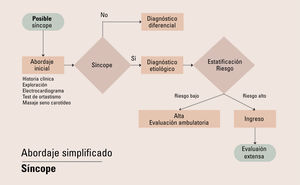
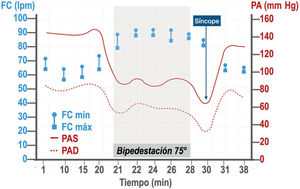
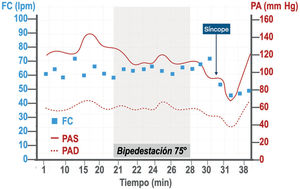
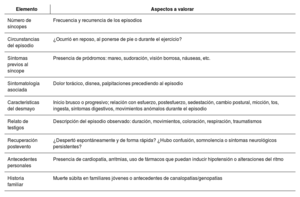
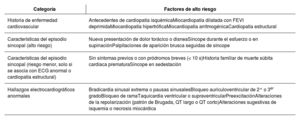

El síncope se define como una pérdida transitoria de la conciencia de inicio súbito, corta duración y recuperación espontánea completa, debida a una hipoperfusión cerebral global. Su etiopatogenia se basa en la caída del gasto cardíaco, de las resistencias vasculares periféricas o de ambos mecanismos en conjunto. Se distinguen tres grandes grupos: síncope reflejo o neuromediado que es el más común, sobre todo en jóvenes; síncope por hipotensión ortostática y síncope de origen cardiogénico que es el que reviste mayor gravedad por su asociación con arritmias malignas y patologías estructurales cardiacas. El enfoque diagnóstico debe ser sistemático, comenzando por una historia clínica detallada, exploración física dirigida y electrocardiograma de 12 derivaciones. La estratificación de riesgo permite diferenciar a los pacientes con mayor probabilidad de presentar eventos graves, orientando decisiones como el ingreso hospitalario, el seguimiento ambulatorio o la derivación a unidades especializadas. Pruebas complementarias como el test de basculación o el masaje del seno carotídeo pueden ser necesarias en casos seleccionados. El reconocimiento temprano de datos clínicos y electrocardiográficos sugestivos de etiología cardiaca resulta esencial para optimizar el pronóstico y evitar eventos adversos.
Syncope is defined as a transient loss of consciousness that has a sudden onset, short duration, and complete spontaneous recovery. It occurs due to global cerebral hypoperfusion. Its etiopathogenesis is based on a drop in cardiac output, peripheral vascular resistance, or both mechanisms together. Three main groups can be defined: reflex or neuromediated syncope, which is the most common, especially in young people; syncope due to orthostatic hypotension; and syncope of cardiogenic origin, which is the most serious due to its association with malignant arrhythmias and structural heart diseases. The diagnostic approach should be systematic, starting with a detailed clinical history, targeted physical examination, and 12-lead electrocardiogram. Risk stratification makes it possible to distinguish patients with a greater probability of presenting with serious events, guiding decisions such as hospital admission, outpatient follow-up, or referral to specialized units. Additional tests such as a tilt table test or carotid sinus massage may be necessary in select cases. Early recognition of clinical and electrocardiographic signs suggestive of cardiac etiology is essential to optimize the prognosis and avoid adverse events.
Identifíquese
¿Aún no es suscriptor de la revista?

Comprar el acceso al artículo
Comprando el artículo el pdf del mismo podrá ser descargado
Teléfono para incidencias
De lunes a viernes de 9h a 18h (GMT+1) excepto los meses de julio y agosto que será de 9 a 15h
